
Ellis Walter · 14 September 2026
International Gatherings Spark Fresh Approaches to Harborwald's Environmental Challenges
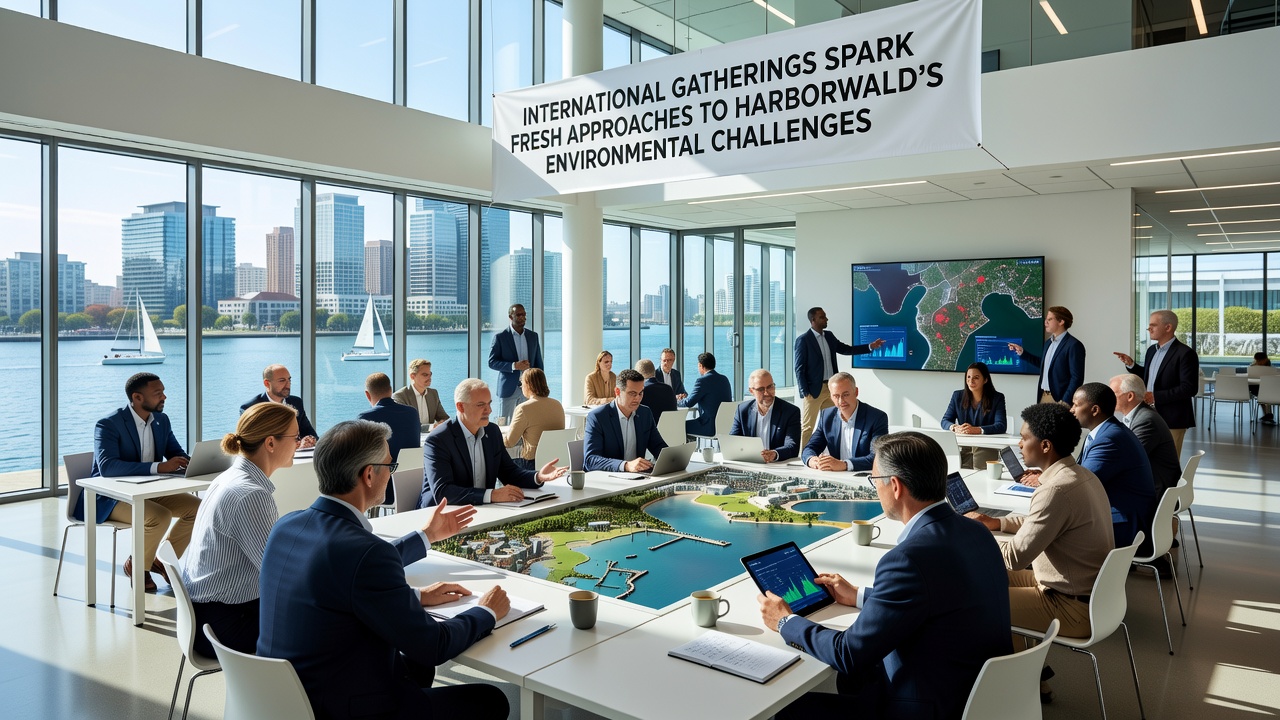
International conferences and summits have brought together specialists from multiple continents to address environmental pressures in Harborwald, and these events have introduced collaborative frameworks that combine data sharing with localized implementation plans. Researchers from European and North American institutions have presented findings on habitat connectivity while policy experts from Asia have contributed models for balancing industrial activity with ecosystem preservation, and the result is a set of integrated proposals that local authorities in Harborwald now evaluate for adoption.
Key Events Shaping Current Strategies
Delegates convened in Hamburg during early 2025 for a Baltic Sea regional forum where representatives reviewed monitoring protocols for coastal zones, and that meeting produced joint guidelines on sediment management that Harborwald planners later adapted to their own harbor-adjacent woodlands. A follow-up gathering scheduled for September 2026 in Copenhagen will focus on transboundary species tracking systems, with participants expected to finalize data exchange agreements that extend across the North Sea and Baltic corridors.
Those agreements build on earlier work by the European Environment Agency, which has documented shifts in forest cover and water quality across similar mixed-use landscapes. Observers note that Harborwald benefits from these established datasets because they allow direct comparison with neighboring regions and speed up the identification of effective intervention points.
Emerging Methods for Habitat and Waterway Management
Workshops held alongside the main sessions explored sensor networks that combine satellite imagery with ground-level readings, and one pilot project in a comparable German coastal forest demonstrated a 15 percent improvement in early detection of invasive plant spread. Harborwald teams have begun testing scaled versions of these networks along key trails and waterway edges, while university researchers from Canada have supplied open-source software that processes the incoming information streams.
Additional sessions examined renewable energy integration at port facilities, and presenters shared case studies from Australian installations that reduced operational emissions without expanding physical footprints. Harborwald stakeholders reviewed these examples during virtual follow-up meetings and identified modular solar arrays as a potential fit for existing infrastructure rather than new construction sites.
Cross-Border Data and Policy Coordination
Participants at the 2025 forum signed letters of intent to maintain annual reporting cycles, and these commitments include standardized metrics for biodiversity indicators that align with International Union for Conservation of Nature protocols. Local Harborwald agencies have incorporated the same metrics into their annual reviews, which creates consistency across borders and simplifies future funding applications from international sources.
Training modules developed during the gatherings have since reached municipal staff through online platforms, and participants report that hands-on exercises covering GIS mapping and community engagement have accelerated project timelines by several months. The September 2026 meeting is expected to introduce advanced modules on climate scenario modeling that draw on datasets maintained by the National Oceanic and Atmospheric Administration.
Implementation Pathways and Next Steps
Harborwald authorities have formed working groups that meet quarterly to translate summit recommendations into actionable steps, and these groups include representatives from forestry services, harbor operations, and academic partners. Early outputs include updated management plans that prioritize corridor restoration along existing rights-of-way and targeted water quality improvements at selected inlet points.
Funding streams identified during the international sessions have opened access to grants administered through European Union environmental programs, and Harborwald projects now compete successfully alongside larger regional initiatives. The 2026 Copenhagen event will feature dedicated matchmaking sessions where project leads can present progress reports and secure additional technical support.
Conclusion
International gatherings continue to supply Harborwald with tested approaches that address overlapping challenges in forests and harbor zones, and the scheduled September 2026 summit will extend these exchanges by focusing on measurable outcomes from current pilots. Continued participation in these networks supplies local teams with updated tools, shared data resources, and coordinated policy options that strengthen long-term environmental management across the region.